Ethical chocolate: the phrase might once have seemed a contradiction in terms, given the industry’s long history of exploitation – of people, land and prices. Plus, it was believed that consumers treating themselves didn’t want to be confronted with the dark side of their bar – and pay more for the privilege. Yet modern chocolate lovers have proved that they do have an appetite for sweet treats that don’t come with a side order of shame.
Lone voices
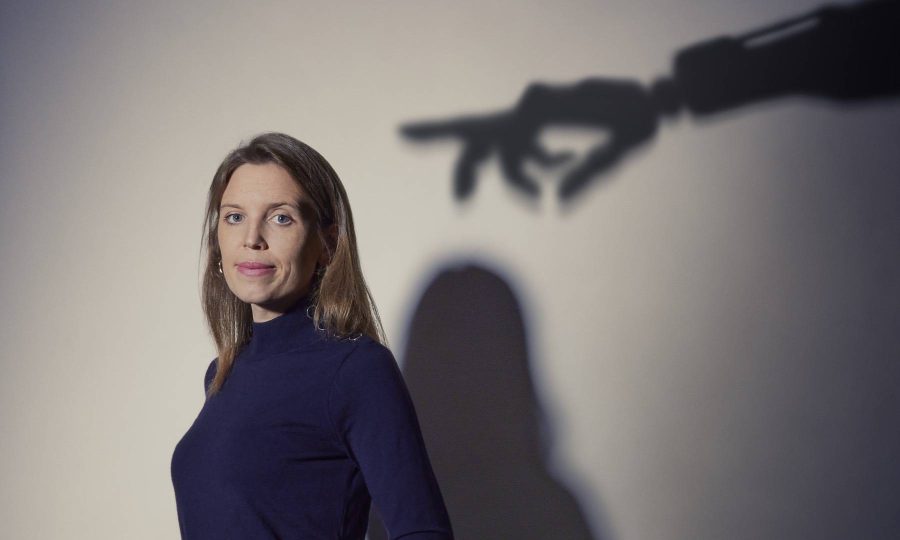
Take impact companies such as Amsterdam-based ethical chocolate maker Tony’s Chocolonely. It was born 20 years ago when three journalists, including founder Teun van de Keuken, went on Dutch television to expose exploitation in the chocolate industry. As a protest, Van de Keuken made an initial 5,000 fair trade, fully traceable milk chocolate bars. Today, Tony’s employs more than 300 people and makes $200m in annual revenue. “Our motivation was, and is, impact,” says Julie Veryser (IBA, 2009; MSc Marketing, 2010), Global Head of Brand at Tony’s Chocolonely.
And the fact that Dutch companies are taking a stand matters, because chocolate is very big business in the Netherlands. The country is the world’s largest importer of cocoa beans, due in part to its historic role in colonialism and the trading routes that developed as a result. It also has large-scale processing facilities for turning the beans into cocoa mass, butter and powder, making it the sixth biggest exporter of chocolate in the world, part of an industry predicted to be worth $2.4bn by 2026. But it’s also where the modern fair trade movement was born in 1988, when a group created the Max Havelaar Foundation (now Fairtrade Nederland) – the original fair trade label.
Paying the price
“Exploitation is the bitter truth behind such a sweet product,” explains Veryser. Poverty, child labour and deforestation are all part of cocoa farming, she points out – and it’s an industry-wide issue that farmers are underpaid but consumers are used to paying less, and don’t want to pay more. This single issue has a range of devastating consequences. “Because the farmers are chronically underpaid, they don’t invest in long-term practices that would make their crops and businesses more resilient. They grow monocultures, using fertilisers and pesticides. This makes the crops very vulnerable to climate change – to extreme rainfall or drought. Diseases such as black pod rot are becoming rife.”
Dependence on fertilisers – many of which are produced in Ukraine – also makes the farmers vulnerable to global instability such as wars. “This last season has been the worst for cocoa,” adds Veryser. “The crop yield has fallen 20 per cent, and prices are at an all-time high.”
Because the farmers are chronically underpaid, they don’t invest in long-term practices that would make their crops and businesses more resilient.
And that high price doesn’t benefit farmers. “Cocoa is traded as a commodity like sugar or coffee,” explains Sanne Muller (Management Innovation, 2021), a food concept and product designer at innovation community Kitchen Republic. “Hedge funds are the only winners. Chocolate makers will have to increase the proportion of cheaper cocoa butter and oils to maintain their margins. Or they will have to pass higher costs on to the consumer – by reducing the weight, for example.”
This makes the task of ethical chocolate makers even more difficult. “On top of the normal price paid to farmers, we pay not just a fairtrade premium but a living income premium,” says Veryser. “It’s the most important thing we do. We want to change the cocoa industry so that farmers benefit from it. But although people forget the second ‘l’ in our name, we’re called Chocolonely because we are lonely in the business.”
Reaching out
There is power in numbers, and Tony’s encourages other cocoa-sourcing companies to become ‘mission allies’ by signing up to the same sourcing principles. These ‘Open Chain’ criteria include: traceable sourcing of cocoa beans; a higher price for farmers; long-term partnerships with farmers; promoting co-operation between farmers; and supporting farming quality and productivity. The company now has 20 mission allies, including Aldi and Ben & Jerry’s, which now pay at least the Living Income Reference Price, long term, to farmers.
If we don’t fix the supply, only a wealthy few will eventually be able to enjoy chocolate.
“We collaborate on cocoa but compete on shelf,” says Veryser. “Selling chocolate is highly competitive. It’s promotion-led, and Tony’s is very expensive. People also have a strong loyalty to the big well-known brands. Still, people love what we stand for, and our bright packaging and great recipes. They complain about our unequally divided bars, which make them hard to split, but that is to remind us about the unequal nature of the industry! We also have a graphic representation of the west African coast on each bar, as that relationship to source is so important.”
Making a change
And other companies and makers are following suit. “For example, Chocolatemakers are producing a CO₂-neutral chocolate which is 100 per cent organic, using cocoa which is brought into Amsterdam on a sailboat whenever possible.” says Muller. “Their chocolate is made in a solar-powered factory. Of course, this kind of utopia is very hard to scale up, but hopefully it pulls the big brands closer to a more ethical and sustainable middle-ground.”
The industry is not futureproofed, she points out, and without innovation, chocolate risks going where meat may also be heading – becoming a scarce high-end product. “Demand for chocolate is growing with the world’s population. But if we don’t fix the supply, only a wealthy few will eventually be able to enjoy it.”
So will ethical chocolate become the rule, rather than the exception? Veryser is cautiously optimistic that the industry can solve its inequality problem. “I think we’re a bit of a contradictory nation,” she muses. “On the one hand, we love brands like Patagonia and the rise of ethical fabrics, but on the other hand we love Shein and fast fashion. Still, we see a huge appetite for Tony’s, and the brand is growing. Culture generally is going in the right direction and companies are doing better – Nestlé has an income accelerator programme for farmers, for example, and fashion brands like H&M are responding to increasing consumer demands. We hope that the emotional connection people have to chocolate will mean they want to help us change the industry.”