Want to innovate? Crazy idea: use people, not AI
We should embrace the human factor, says Professor Dirk Deichmann – not try to work around it.
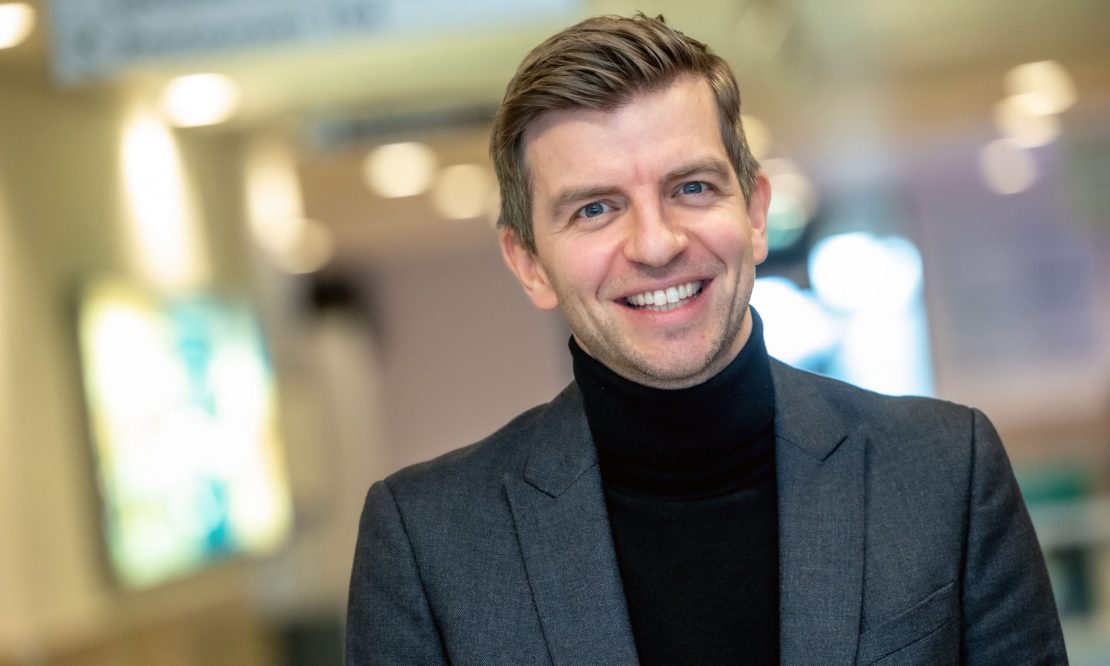
When Professor Dirk Deichmann was casting around for an image to illustrate his lecture on AI and innovation, he decided on René Magritte’s 1928 surrealist painting The False Mirror. It’s not hard to see why. Magritte presents to us a vast lashless eye, its iris a cloudy blue sky, its black, flat pupil a hole at its centre. As we stare at it, it stares back at us: you see as much as you yourself are seen.
“In many ways, AI is like this false mirror,” says Deichmann. “You can see and discover so many ideas with it. But you’re also being seen. AI looks at you and uses your past contributions as input for others. Scraped from others and recombined, these ideas aren’t truly original. You think you see something new – but you don’t.”
Deichmann should know: he’s spent two decades examining how we can have better ideas. AI, he says, has its place in the innovation process – for example, to help those uncomfortable with drawing to visualise an idea. But an organisation is far more likely to come up with genuinely useful ideas if its innovation pipeline values those qualities that humans have and AI doesn’t: empathy, collaboration, real-world experience, expertise and intuition.
Too many ideas
This is because in some ways, AI-driven processes echo a very rigid, process-driven, conveyor-belt style of innovation, which tended to lose sight of the people it was supposed to serve – as anyone who has used a maddeningly unintuitive software package will recognise. To find better ways of doing things, innovators turned to new methods, says Deichmann. “We teach human-centred perspectives of innovation, where you put yourself in your customer’s shoes. A design-thinking approach allows you to experiment, get feedback and find out what works and what doesn’t.”
In many ways, AI is like this false mirror. You can see and discover so many ideas with it. But you’re also being seen.
But now, the conveyor belt is back – and powered by AI, it’s bigger than ever, as Deichmann discovered when he incorporated ChatGPT into an exercise in his design-thinking class. He asked students to work together in pairs to create a meaningful and personal Rotterdam souvenir for their partner. Usually, they would brainstorm ideas. This time, he told them to ask ChatGPT. The result? Thousands of “okay-ish” ideas, none of them brilliant, none of them original. In other words, a mirror of what already exists.
People power
Contrast this experience, Deichmann says, with research he carried out with patient fear reduction expert Roel van der Heijd, in partnership with the Eye Hospital Rotterdam, to improve patient experience. They visited the hospital, talked to patients, observed how they behaved and tried to imagine what it feels like to be facing an operation on one of the most delicate and vital parts of our bodies. “One of the most important insights we came away with was very simple: when you go into the Eye Hospital, you’re often terrified of going blind. You are stressed. You have a lot of anxiety. And that gets in the way of your treatment and recovery.”
These insights enabled the Eye Hospital to make a series of small interventions that made a big difference, both in the hospital’s interior and around how medical staff interacted with patients. Could ChatGPT have generated those ideas? Deichmann says not. “Because ChatGPT doesn’t have an empathy button. Yes, you can feed it data and information about personas – but why don’t you just talk to a patient directly? It’s always better to reach out to real people because, in the end, whatever you develop will be for people.”
Quality, not quantity
In these times of grand challenges, he points out, we need to innovate more than ever – but we need quality, not quantity. “It doesn’t help to have a large quantity of instant bad ideas – and don’t forget, all your competitors will have access to the same information that the AI draws upon. We need to focus on fewer ideas, of higher quality. You can’t get radical ideas from the same pool of information that everyone else is fishing in.”
And those ideas will only come to fruition, he believes, if we recognise just how powerful our human qualities are in their making – to trust our human skills, to develop them further, and not allow them to wither in the face of what looks like an easier option. After all, ChatGPT didn’t play a role in the discovery of antibiotics, the invention of the world wide web, or the Complete Works of Shakespeare.
“So far, humans have come up with some pretty good things,” says Deichmann. “And we’re especially good at identifying latent needs, unrecognised customer demands. All AI does is give you things that have already been thought of. We should be getting out from behind our screens, talking to people, spending time with customers and clients, learning what problems they are actually facing and developing radical new ideas together.”