A whole new ball game
His footballing career may have been cut heartbreakingly short – but the lessons he learned on the pitch have made Adel Askarian a winner in business

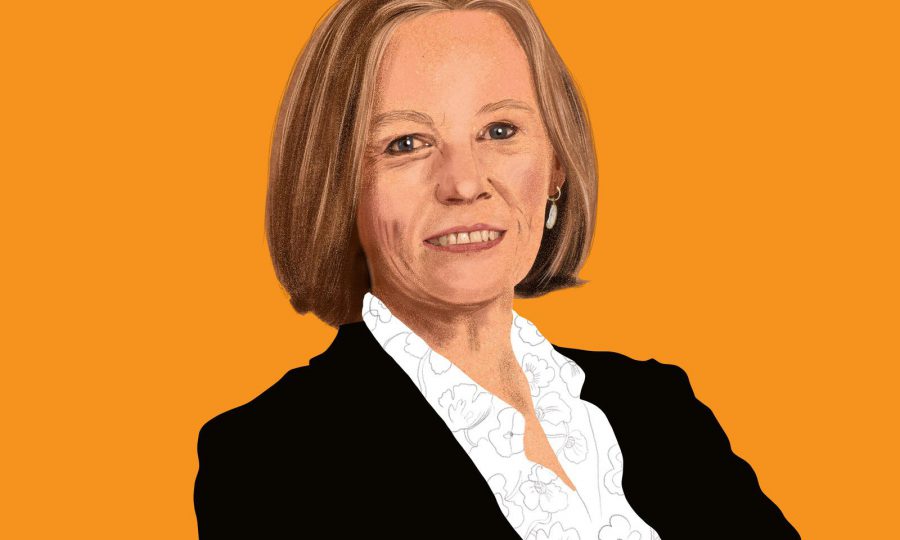
Aged just nine, Adel Askarian (MSc Marketing Management, 2012) was named the most promising young football player in the Netherlands. His parents were incredibly proud. The entire Rotterdam-Oost neighbourhood where he grew up was behind him. He was scouted for clubs and aced every tryout. Football superstardom beckoned.
Then, a few years later, it all fell apart.
“When I was 15, I tried out for the national under-15 team and didn’t make the cut,” he remembers. “That was a key milestone – and I failed.” But still he kept going, as pressure to succeed kept rising. Then, at 17, he was diagnosed with heart disease and had to have two long, complex surgeries. He was lucky to be alive, the doctor told him. But his professional footballing days were over. His agent never called him again.
But, it was the lessons that Askarian learned on the pitch that helped him when all his dreams had been completely shattered. And it was finding his way back to football that gave him the success he enjoys today.
That was a key milestone – and I failed. I knew that I had to make a new plan.
The work ethic that becomes second nature to most sportspeople kicked in as he lay in his hospital bed after his second surgery. “I knew that I had to make a new plan,” he says. “I had some textbooks in my hospital room, so I just grabbed the first one and started reading. It was a big book about marketing and I read the whole thing in two days. Football had always been the number one thing in my life and I hadn’t really thought about studying that much. Now, I went from the football field to the library. I just switched.”
Askarian has always been entrepreneurial. As a child, his family didn’t have much. From the age of 10, he worked picking bulbs, returning bottles to the supermarket for cash and washing dishes in a pizza parlour – all alongside his football training. When he was 12, he started his own car wash company, going door to door with a bucket and a cloth. So, it made sense that business would be his new focus.
He won a place at RUAS, studying business administration, before joining RSM. Along with a friend, he started a business matching students with internships abroad. It proved to be another learning experience.
“We had interest from investors but they told us that we should change our business model,” he recalls. “We were asking for the student to pay us: they thought we should ask the employer to pay, as that was more scalable. But we were very young – just 19. We didn’t know anything. We rejected their offer. Of course, now I see they were right.”
He took up a management traineeship at NS Stations, the body which manages and owns all railway stations in the Netherlands, and worked there for six years, always looking for a side project to develop. While he enjoyed the work, he realised that something was missing: football. Slowly, he started following it again – and enjoying it. Perhaps, he thought, he could combine his entrepreneurial spark with football?
In 2017, he gave it his first shot: an agency bringing promising young footballers from abroad to train in the Netherlands, then try out for clubs, taking advantage of the country’s superb football infrastructure. “Every neighbourhood has two football clubs and every club has six fields!” he says. Over two and a half years, more than 100 young people joined. But none of them were accepted into a club.
“So, in that sense, it wasn’t successful,” he says. “But during that time, I noticed a massive gap in the market. I met an old friend, Michel Poldervaart, who had played for Feyenoord while I was playing for Sparta Rotterdam. I knew he was smart, so I sat him down and said: ‘Listen, I’ve been around the football schools with my agency and I’m not impressed. There’s no philosophy. There is no attempt to build relationships with the kids and their parents. Their business model is short-term. They say: ‘Come and train with us for two sessions and we’ll turn you into Lionel Messi.’ To truly develop a player, a school must think long term.’”
Together, the two founded TIFA Sports, which now has more than 700 players. Its aim is to take on and develop players for the long term – starting with toddler football for fun, right up to the Legends in the Making programme, for top young players who are already professionals. “We say that we will make you a better player but also make you a better person,” says Askarian. “I didn’t make it in football. I didn’t win the World Cup. But football made me disciplined and hard-working.”
I didn’t win the World Cup. But football made me disciplined and hard-working.
Through it all, what has he learned from failure? “Accept that when you are trying something new, it’s a rollercoaster of emotions,” he says. “At the highest point, you can celebrate, but you also need to stay calm. At your lowest point, go to sleep and say to yourself that tomorrow you’ll come up with a plan. Failing becomes easier the older you get, too. You’ve already overcome so many things. This is just another one.”
He remembers a moment, years after his heart surgery, when his first failure really hit. “I was at home, alone, when it suddenly occurred to me: I will never be a football player. I will never play in a stadium. That made me feel very emotional,” he says. “But then I thought: no, I need to be happy and grateful for the opportunity that was granted to me. And looking back, I now see that everything happens for a reason. Now I’m working in the football business. What I’m doing every day is a dream.”